


No business wakes up one morning and thinks, “You know what we need? Six different versions of the...
In this blog we look at why most companies are overthinking automation, and what actually makes the biggest difference.
There’s something almost mythical about the way the word automation lands in conversation. It tends to trigger images of complicated system diagrams, someone talking nonsense about hyper-efficiency or workflow orchestration, and a vague sense that whatever’s being discussed is probably going to take six months and a small army of consultants to implement, and don't forget the monstrous cost. And because that picture feels overwhelming, most businesses quietly step back from the subject and carry on as they are.
What rarely gets acknowledged is that none of that complexity is necessary. The real power in automation, the stuff that actually changes the feel of a business, lives in the much smaller, more ordinary moments that people have stopped noticing.
These are the simple, repeatable bits of work that everyone does without thinking, even though they often take longer than they should and cause more friction than anyone admits out loud.
What’s fascinating is that the biggest gains usually come from a surprisingly small set of automations. Once you step back and examine how work actually flows through a business, it becomes clear that approximately 20% of the processes carry the majority of the weight.
These aren’t dramatic, end-to-end systems or clever algorithmic workflows. They’re just the small, foundational moments that quietly hold everything together. And when they’re automated well, they make around 80% of the experience, for both the team and the customer or client, dramatically easier.
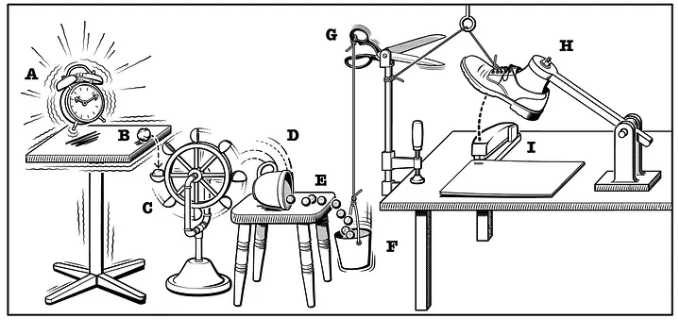
To see this clearly, you need to look at the true sources of friction inside a business. Contrary to popular belief, the biggest slowdowns aren’t caused by huge strategic problems; they’re caused by dozens of small, everyday frictions that people have simply learned to tolerate. It might be a sales follow-up that slips because the day ran away from someone, an onboarding step that only one person ever remembers to do, a customer update that gets lost in a chain of messages, or a task that never gets added to the system because the relevant person was juggling five things at once. These issues are tiny in isolation, yet together they create a constant undertone of drag.
Most of the time, no one complains about these things because they’ve been happening for so long that they feel normal. People simply absorb the friction and continue with their day. And because no single event feels big enough to justify a fix, nothing changes.
This is where automation earns its keep. It doesn’t have to reinvent the business. Instead, it quietly removes the weight people have been carrying on their shoulders, often without realising how much energy they’ve been spending keeping the wheels turning.
Take something as simple as routing sales enquiries. When it’s done manually, someone always ends up hovering over an inbox, forwarding things, checking capacity, and hoping they’ve assigned the right person. No one loves that task, and yet it happens every day. A clean, rules-based automation removes that responsibility entirely and frees up time, attention and follow-up speed in one move.
The same is true for follow-ups. Most lost opportunities don’t vanish because the prospect said no; they disappear because someone got caught up in something else and didn’t realise the next step was overdue. A simple automated reminder or task creation process keeps the momentum alive without demanding more from the team.
Lifecycle updates are another quiet source of chaos. When they rely on manual updates, they’re often inconsistent, which means reporting becomes something people interpret rather than trust. The whole picture stabilises instantly when those transitions are handled automatically.
And onboarding is a classic example. If the experience changes depending on who happens to be free, customers can feel the inconsistency immediately, and the team ends up reinventing the wheel unnecessarily. A handful of triggers and automated steps make that early journey feel far more considered without adding extra work for anyone.
The thing all these examples have in common is that they remove repetition and reliance on memory. People are great at judgment, creativity and problem-solving. They’re less great at doing the same admin task every day with perfect consistency. Automation takes the fragile parts of a process and reinforces them, leaving the team to focus on the parts of their job they’re actually brilliant at.
What often holds companies back is the belief that automation has to be comprehensive or sophisticated. But the organisations that get the most value from it start very simply. They look for the few things that happen constantly, cause mild annoyance, and never seem to get solved because they’re just part of the job. They automate one of them. They feel the difference. Then they automate another. Bit by bit, the business becomes easier to run.
There’s no grand transformation, just a steady removal of friction, complexity and cognitive load. And suddenly, the organisation stops feeling like it’s constantly compensating for its own processes.
This is the real promise of automation - creating an environment where the most common, energy-draining tasks finally take care of themselves. When the basics flow smoothly, people have more space, mentally and practically, for the work that actually matters.
To sum up, that’s what the 20% does… it unblocks the 80%.
If you’re reading this and thinking, 'yes, this is literally our life,' then you’re probably sitting on a few automations that could save your team a surprising amount of time and stress. It doesn’t need to be complicated, you just need the right starting points. Send an email to jenny@hellodisruptive.com or yiuwin@hellodisruptive.com for a no obligation chat. We'd love to hear from you.